

ABOUT YOUR LATEST BOOK
Hi Catriona. Thank you for joining us today. Please, tell us about your latest work, THE LAST BOOK ON EARTH.
Southern Africa, 2065. Liyan Madikizela is four months pregnant when her partner Tym, a deep-web researcher, reads out a puzzling entry from an Englishwoman’s 1836 travel journal. While visiting a lush farm with a manor house set below a loaf-shaped mountain, the writer reportedly saw men in futuristic suits and helmets carrying armaments, some of which seemed to emit light. But when Tym tries to view remnants of the farm via satellite imagery, it remains a mystery. Finding the place becomes his obsession, and later, when he and Liyan flee to the countryside after a solar storm has destroyed the world’s power grid, he realises he’s not the only one with the knowledge.
Meanwhile, energy-healer Freya and matter-sculptor Myx, rival honours students at the elite Altereal BioPhysix Institute, have found themselves trapped in a test scenario in a burnt-out forest under a mountain. A man with no name is searching for a woman he cannot remember but has loved across space and time. A shaman arrives with a message from the dead for Liyan and her new baby, and two armies advance, seeking arable land and new beginnings. Who will claim the farm – if it really exists? Amid anarchy and fear, can a small group of people, including Liyan, Freya and the shaman, find a way to preserve the parts of civilisation worth saving?
What inspired you to write it?
I lived on a farm for four years, and it made a huge impression on me. Seeing birds being plucked for the pot, water pipes fixed, vegetables grown, fruit trees pruned and harvested, made me wonder: if city people like me don’t know how to farm or use manual equipment, what would happen if shops, technology and modern life suddenly stopped functioning? (Our national power outages made it all the more real.) What would I do? Where would I go? Intrigued, I decided to let it play out, in fiction.
The sad truth is that the South African reading market is small, and it’s even smaller for writers of Science Fiction and Speculative fiction. What is it about this genre that so appeals to you?
Actually I’m not a big reader of sci-fi and speculative fiction. I stumbled upon this genre because it’s the only vehicle that would allow me to think really big – grand and dystopian – and see what would happen.
I believe that all good fiction is built on a foundation of fact, and this is even more important for Science Fiction and Speculative fiction. In The Last Book on Earth, you describe a terrifying climatic future for us. Tell us about the research you did that led to you imagining this world.
Agreed. I read a lot while writing The Last Book on Earth, and gathered a fat file of clippings from newspapers, journals, websites to refer to. A book I found enormously helpful was Lewis Dartnell’s The Knowledge: How to rebuild our world from scratch. It’s a practical collection of all the basic skills humans would need if some cataclysmic event left us without power, water and food supply, transport, communication and medicine – without all the modern conveniences we take for granted. I also attended talks by the University of Cape Town’s physics department on the sort of scientific developments we might see in future, from nanotechnology applications to human life on Mars: a young female physicist who’d been shortlisted for the Mars One Project, which was planning one-way trips to establish the first human settlement on Mars, talked us through the practicalities of the proposed mission.
What message/s would you like readers to take away from this novel?
This is a story about loss, love and second chances. As a human being, you will suffer great losses, but there will also be opportunities to love and live fully again. It’s also about human folly and ingenuity, and what we stand to lose if we rely completely on technology. If you don’t know how to grow a plant from seed or cutting, and you don’t bother reading maps any more because your smartphone GPS is more convenient, think again. Think, ‘What if?’ Old-fashioned manual skills could save your life.
Writer’s Snap Shot
- Top 3 writers: Yuval Noah Harari, Hilary Mantel, Mary Wesley.
- Top 3 books: The Road, Pride and Prejudice, Sapiens.
- Top 3 television Shows: I don’t watch TV. (I’ve tried, but I really prefer reading.)
- Top 3 movies: Wonder Boys, The Matador, The Darjeeling Limited.
- Top 3 musical acts: Beatenberg, Lady Zamar, Fleetwood Mac.
- What are you reading right now? Homo Deus by Yuval Noah Harari.
- What are you watching right now? Life happening.
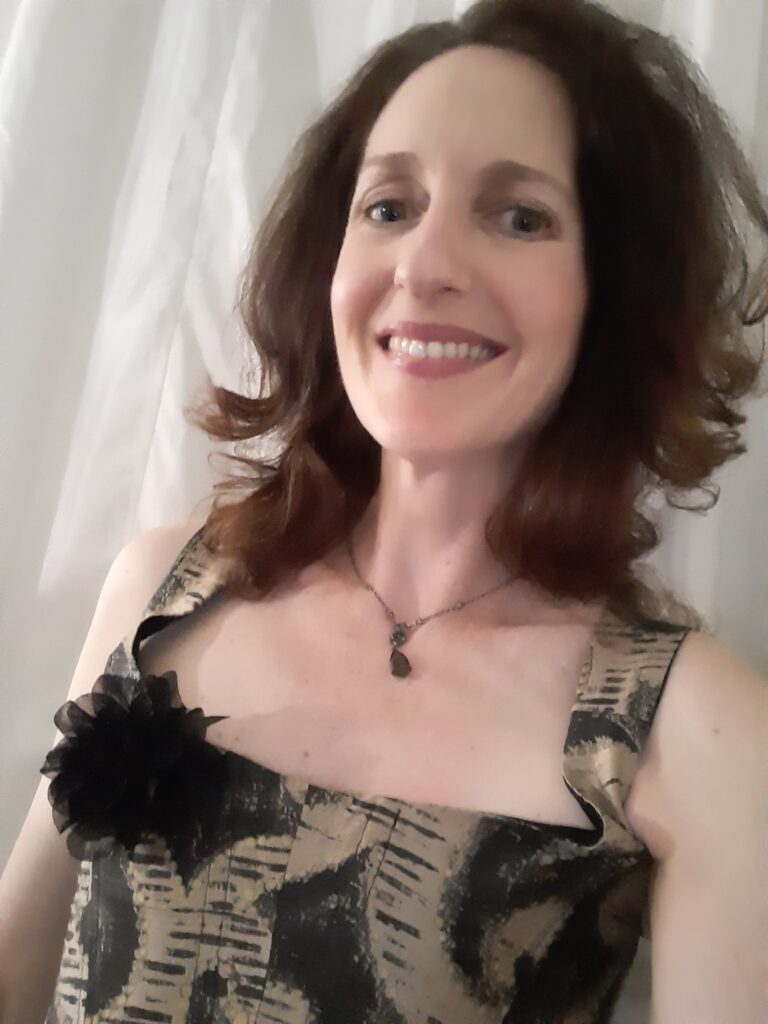
Can you tell us a bit more about yourself? Where you come from, what you do, your interests and hobbies etc. Any fun details
Born and bred in Cape Town, I work as a book editor for a publisher, and previously spent many years as a journalist and magazine features editor. My vices include shopping at charity stores and subversive thoughts. My joys are dancing tango, practising Zen meditation, and making up ridiculous names for people (including ourselves) with my daughter.
What’s your earliest piece of writing that you remember?
A poem I wrote at age eight was published in English Alive, a journal of school literature. It was called ‘Flying’. I remember my Standard One teacher patting me on the shoulder and showing me my poem in the book.
In your opinion, what’s the greatest challenge facing writers in the South African market?
The relatively small market of book buyers, compared with developed countries like the US, Britain and Australia. That said, if you write a novel that becomes a prescribed reader for local school or university students, you could sell a lot of books.
How do we overcome this challenge?
Keep your day job, enter writing competitions, and apply for writing residencies. You can try to write a book that will resonate with readers internationally and look for an overseas publisher. Or write stories about local people, places and issues that are so compelling they become setwork books. Focusing on a niche that you’re passionate about is better than trying to emulate the bestsellers of the moment, I feel. It’s more honest, and your genuine fascination with the topic is likely to touch readers.
Where do you get your inspiration for your books/stories from?
From situations I’ve experienced, whether as a witness or a direct participant; from the memorable characters I encounter in daily life; and from the weird thoughts that drop into my head. My mind produces these quirky ideas that make me go, ‘Ooo, I like that. Imagine if that happened.’
Writing is hard. It’s a lonely art that requires you to be disciplined. It requires hours and hours of research and even more time hunched over a computer and writing. Thereafter, you open yourself up to criticism from complete strangers. Why would you want to do that to yourself?
It’s the price you pay for creating something. As soon as you put something out there, you divide opinion. Some people will love it, some will hate it. Oh, and plenty will be indifferent. That’s why it’s important to have solid, personal reasons why you write. And to be confident in the products you put out in public. There are plenty of people who won’t like your work and will gladly dismiss it in a one-sentence tweet, but you’ve got to ask yourself: did they write a novel?
In my opinion, the goal of a writer is to evoke a reaction from the reader. What do you hope to evoke from your readers with this book/with your writing?
I’m a writer, a philosopher and a spiritual teacher. My aim is to entertain people into opening their minds and shifting their consciousness so they can see things in a different way. I aim to bring a sense of hope and possibility, as well as accountability: for example, to heighten awareness of pressing issues like climate change, and to encourage people to take personal responsibility for the way things turn out.
Do you read your book reviews? How do you deal with bad or good ones?
Yes, I do. Bad ones: I sometimes agree with the criticism. And if someone just didn’t like my book, that’s fine. Taste in literature is highly personal. I shrug and feel glad they took the time to a) read my book and b) review it. The good ones? Sometimes I marvel at what readers and reviewers draw from a book, especially when it wasn’t something I’d consciously intended. The reader is the mysterious Other in the conversation that is a book. With each reader, different alchemy happens. When someone has a ‘Yes, I loved it!’ response, it leaves me with a smile on my face that lasts years, because it confirms I achieved what I set out to do. I recently read on The Good Book Appreciation Society Facebook group that one of its members had adored my first novel, The Love Book (Oshun), and had read it at least eight times. That was really special to hear.
Do you hide any secrets in your books that only a few people will find?
Definitely. There are little in-jokes and asides for people with all sorts of arcane interests: Zen Buddhists, dancers of the Argentine tango … Also, in The Last Book on Earth I edited out a lot of detail and backstory. A romantic part of me thinks an energetic residue of these pasts remains in the book and some readers who are sensitive to these things will absorb them.
Are you working on any other projects at this moment? What do you have planned for the future?
I recently finished writing a collection of essays entitled Vital Sight: 10 Radical Views for a Richer Life. Each chapter focuses on a concept, with a diagram, to encourage you to see life from a more helpful perspective. It’s totally quirky and eclectic, with examples ranging from shipwrecks to Formula One drivers to the Dalai Lama. One can be very creative with the essay form: keep it succinct and academic; let it grow organically wild; mix it all up. I had a blast with it.

Engage with Catriona
Twitter: @CatrionaWriter