Deprecated: Creation of dynamic property WP_Term::$cat_ID is deprecated in /home/booksgpb/public_html/wp-includes/category.php on line 378
Deprecated: Creation of dynamic property WP_Term::$category_count is deprecated in /home/booksgpb/public_html/wp-includes/category.php on line 379
Deprecated: Creation of dynamic property WP_Term::$category_description is deprecated in /home/booksgpb/public_html/wp-includes/category.php on line 380
Deprecated: Creation of dynamic property WP_Term::$cat_name is deprecated in /home/booksgpb/public_html/wp-includes/category.php on line 381
Deprecated: Creation of dynamic property WP_Term::$category_nicename is deprecated in /home/booksgpb/public_html/wp-includes/category.php on line 382
Deprecated: Creation of dynamic property WP_Term::$category_parent is deprecated in /home/booksgpb/public_html/wp-includes/category.php on line 383
From the creator of Desperate Housewives, comes Why Women Kill. Desperate Housewives never really appealed to me, and the reviews I’d seen of Why Women Kill were lukewarm at best, so I wasn’t too keen on watching this show. I can confirm that I was pleasantly surprised.

What’s it about?
Why Women Kill is a dramady. There are three separate stories set in three different timelines; the 1960’s, 1980’s and 2019; all connected by the same house. The viewer ventures between these periods numerous times in the course of each episode. You would think the transitions would be jarring, but it works extremely well.
Why Women Kill has an assemble cast of not quite A-List actors, but not far off. In the 1960’s timeline, we meet Beth Ann, played extremely well by Ginnifer Goodwin. After a horrific tragedy, docile housewife Beth Ann and her husband Rob, played by Sam Jaeger move into a new home. Beth Ann soon learns that Rob is not as doting a husband as she had originally thought. He is having an affair. Aided by her new neighbour Sheila, played by the scene stealing Alicia Coppola, Beth Ann begins to plot her revenge.

In the 1980’s, Lucy Lui plays the superficial socialite Simone Groves, whose happy third marriage is torn apart upon discovering that her husband played by Jack Davenport is gay. Desperate not avoid embarrassment, Simone tries to find a quiet solution to this problem.
Finally in 2019, couple Taylor (Kirby Howell-Baptiste) and Eli (Reid Scott) have an open marriage. And it works well for them, until Taylor starts developing feelings for her latest ‘hook-up’ Jade (Alexandra Doddario) and welcomes her into their home. The complications increase when Eli also starts developing feelings for Jade. But that’s not the end of the conflict, as everything comes to a crescendo when we learn that Jade is not exactly who she appears to be.

The show is brilliantly written, with many laugh out loud moments punctuated with some serious heartbreaking moments of drama. I absolutely loved it.
Season 2 is currently being flighted and stars Nick Frost (Hot Fuzz) and Allison Tolman (Fargo). This too, looks like it will be a great season.
4/5
]]>Deprecated: Creation of dynamic property WP_Term::$cat_ID is deprecated in /home/booksgpb/public_html/wp-includes/category.php on line 378
Deprecated: Creation of dynamic property WP_Term::$category_count is deprecated in /home/booksgpb/public_html/wp-includes/category.php on line 379
Deprecated: Creation of dynamic property WP_Term::$category_description is deprecated in /home/booksgpb/public_html/wp-includes/category.php on line 380
Deprecated: Creation of dynamic property WP_Term::$cat_name is deprecated in /home/booksgpb/public_html/wp-includes/category.php on line 381
Deprecated: Creation of dynamic property WP_Term::$category_nicename is deprecated in /home/booksgpb/public_html/wp-includes/category.php on line 382
Deprecated: Creation of dynamic property WP_Term::$category_parent is deprecated in /home/booksgpb/public_html/wp-includes/category.php on line 383
Deprecated: Creation of dynamic property WP_Term::$cat_ID is deprecated in /home/booksgpb/public_html/wp-includes/category.php on line 378
Deprecated: Creation of dynamic property WP_Term::$category_count is deprecated in /home/booksgpb/public_html/wp-includes/category.php on line 379
Deprecated: Creation of dynamic property WP_Term::$category_description is deprecated in /home/booksgpb/public_html/wp-includes/category.php on line 380
Deprecated: Creation of dynamic property WP_Term::$cat_name is deprecated in /home/booksgpb/public_html/wp-includes/category.php on line 381
Deprecated: Creation of dynamic property WP_Term::$category_nicename is deprecated in /home/booksgpb/public_html/wp-includes/category.php on line 382
Deprecated: Creation of dynamic property WP_Term::$category_parent is deprecated in /home/booksgpb/public_html/wp-includes/category.php on line 383
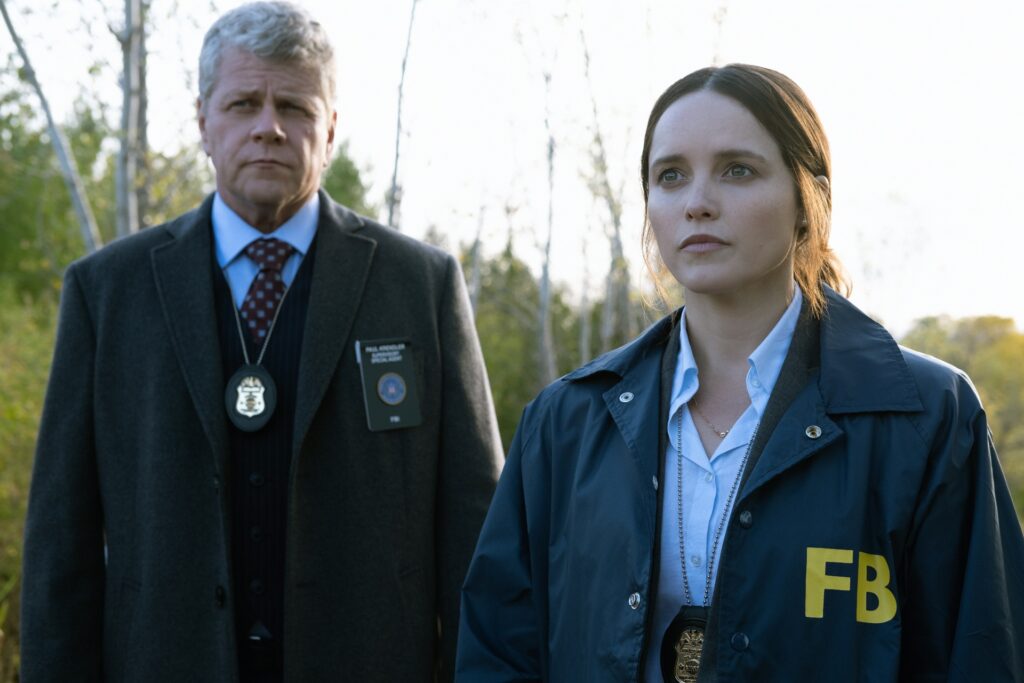
Hannibal Lector and Clarice Starling are two deities in the pantheon of crime and psychological fiction. In the television series, we are shown the time period immediately after Clarice Starling kills Jame Gumb. Chronologically, it is set between the events of Silence of the Lambs and Hannibal.
What’s it about?
In Clarice, we follow Clarice Starling as a new FBI agent. She has achieved a level of fame due to her killing Jame Gumb (no, it’s not a typo. The characters Buffalo Bill in Silence of the Lambs real name is Jame, not James) as well as her interaction with the escaped Dr Hannibal Lector is fodder for tabloid newspapers. In the FBI though, she is a victim of jealousy from her colleagues who seem eager to watch her star burn itself out.
When I heard about this show, I was excited to watch it. As a writer, I view the cannon of Thomas Harris as the pinnacle of dark, psychological crime fiction. I must say though, that I’ve been greatly disappointed by the series. It does not have the dark, gritty realism of the source subject, nor the mood and atmosphere of other adaptions of Harris’s work.
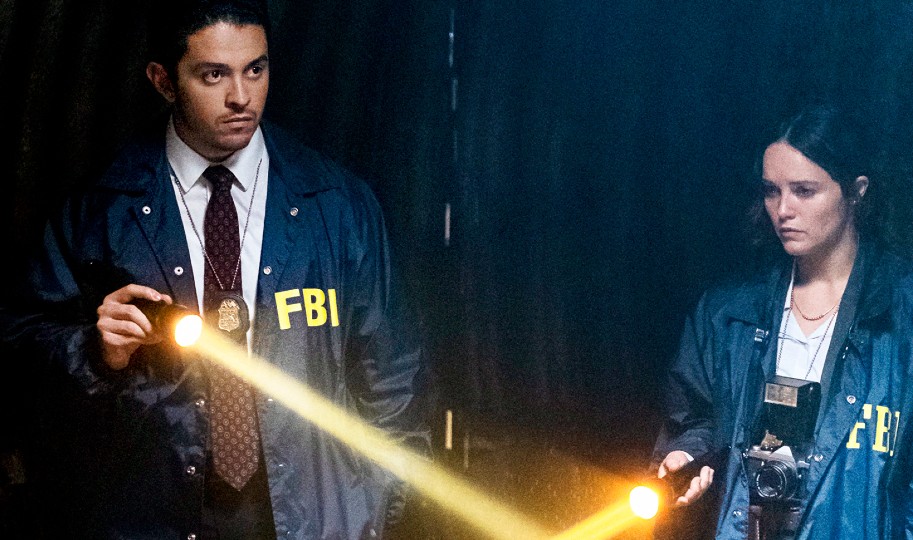
One of the greatest travesties of modern television was the cancellation of the television series Hannibal. Stylistically it took the Hannibal universe into new territory both narratively and cinematically. It was brave and it took risks, and they mostly paid off. Clarice though, could well be a spin off of CSI. For a lack of a better term, I find the subject matter to be diluted and weak. Perhaps it was done to appeal to a more mainstream audience, I’m not sure. And perhaps it does. Perhaps, because I’m such a fan of Thomas Harris and could practically write a Phd on Hannibal Lector universe that I’m being more critical….Perhaps… But should a census take try to test me on whether I would recommend this show, I’d give it a hard pass.
2/5
]]>Deprecated: Creation of dynamic property WP_Term::$cat_ID is deprecated in /home/booksgpb/public_html/wp-includes/category.php on line 378
Deprecated: Creation of dynamic property WP_Term::$category_count is deprecated in /home/booksgpb/public_html/wp-includes/category.php on line 379
Deprecated: Creation of dynamic property WP_Term::$category_description is deprecated in /home/booksgpb/public_html/wp-includes/category.php on line 380
Deprecated: Creation of dynamic property WP_Term::$cat_name is deprecated in /home/booksgpb/public_html/wp-includes/category.php on line 381
Deprecated: Creation of dynamic property WP_Term::$category_nicename is deprecated in /home/booksgpb/public_html/wp-includes/category.php on line 382
Deprecated: Creation of dynamic property WP_Term::$category_parent is deprecated in /home/booksgpb/public_html/wp-includes/category.php on line 383
ABOUT YOUR LATEST BOOK
Hi Catriona. Thank you for joining us today. Please, tell us about your latest work, THE LAST BOOK ON EARTH.
Southern Africa, 2065. Liyan Madikizela is four months pregnant when her partner Tym, a deep-web researcher, reads out a puzzling entry from an Englishwoman’s 1836 travel journal. While visiting a lush farm with a manor house set below a loaf-shaped mountain, the writer reportedly saw men in futuristic suits and helmets carrying armaments, some of which seemed to emit light. But when Tym tries to view remnants of the farm via satellite imagery, it remains a mystery. Finding the place becomes his obsession, and later, when he and Liyan flee to the countryside after a solar storm has destroyed the world’s power grid, he realises he’s not the only one with the knowledge.
Meanwhile, energy-healer Freya and matter-sculptor Myx, rival honours students at the elite Altereal BioPhysix Institute, have found themselves trapped in a test scenario in a burnt-out forest under a mountain. A man with no name is searching for a woman he cannot remember but has loved across space and time. A shaman arrives with a message from the dead for Liyan and her new baby, and two armies advance, seeking arable land and new beginnings. Who will claim the farm – if it really exists? Amid anarchy and fear, can a small group of people, including Liyan, Freya and the shaman, find a way to preserve the parts of civilisation worth saving?
What inspired you to write it?
I lived on a farm for four years, and it made a huge impression on me. Seeing birds being plucked for the pot, water pipes fixed, vegetables grown, fruit trees pruned and harvested, made me wonder: if city people like me don’t know how to farm or use manual equipment, what would happen if shops, technology and modern life suddenly stopped functioning? (Our national power outages made it all the more real.) What would I do? Where would I go? Intrigued, I decided to let it play out, in fiction.
The sad truth is that the South African reading market is small, and it’s even smaller for writers of Science Fiction and Speculative fiction. What is it about this genre that so appeals to you?
Actually I’m not a big reader of sci-fi and speculative fiction. I stumbled upon this genre because it’s the only vehicle that would allow me to think really big – grand and dystopian – and see what would happen.
I believe that all good fiction is built on a foundation of fact, and this is even more important for Science Fiction and Speculative fiction. In The Last Book on Earth, you describe a terrifying climatic future for us. Tell us about the research you did that led to you imagining this world.
Agreed. I read a lot while writing The Last Book on Earth, and gathered a fat file of clippings from newspapers, journals, websites to refer to. A book I found enormously helpful was Lewis Dartnell’s The Knowledge: How to rebuild our world from scratch. It’s a practical collection of all the basic skills humans would need if some cataclysmic event left us without power, water and food supply, transport, communication and medicine – without all the modern conveniences we take for granted. I also attended talks by the University of Cape Town’s physics department on the sort of scientific developments we might see in future, from nanotechnology applications to human life on Mars: a young female physicist who’d been shortlisted for the Mars One Project, which was planning one-way trips to establish the first human settlement on Mars, talked us through the practicalities of the proposed mission.
What message/s would you like readers to take away from this novel?
This is a story about loss, love and second chances. As a human being, you will suffer great losses, but there will also be opportunities to love and live fully again. It’s also about human folly and ingenuity, and what we stand to lose if we rely completely on technology. If you don’t know how to grow a plant from seed or cutting, and you don’t bother reading maps any more because your smartphone GPS is more convenient, think again. Think, ‘What if?’ Old-fashioned manual skills could save your life.
Writer’s Snap Shot
- Top 3 writers: Yuval Noah Harari, Hilary Mantel, Mary Wesley.
- Top 3 books: The Road, Pride and Prejudice, Sapiens.
- Top 3 television Shows: I don’t watch TV. (I’ve tried, but I really prefer reading.)
- Top 3 movies: Wonder Boys, The Matador, The Darjeeling Limited.
- Top 3 musical acts: Beatenberg, Lady Zamar, Fleetwood Mac.
- What are you reading right now? Homo Deus by Yuval Noah Harari.
- What are you watching right now? Life happening.
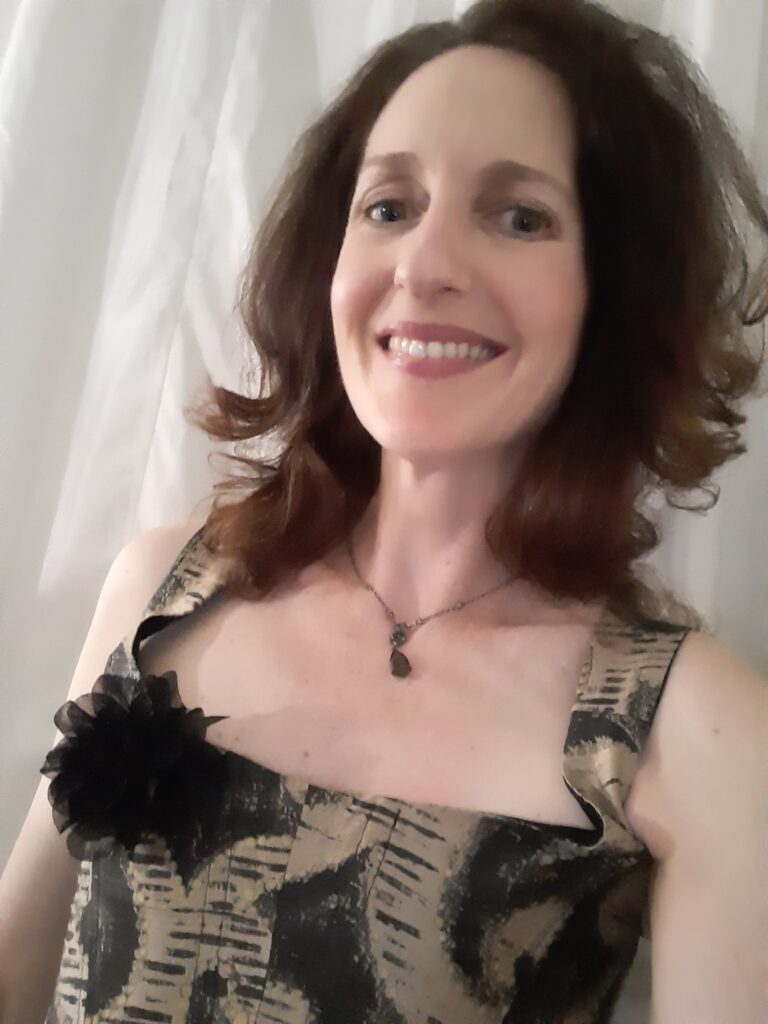
Can you tell us a bit more about yourself? Where you come from, what you do, your interests and hobbies etc. Any fun details
Born and bred in Cape Town, I work as a book editor for a publisher, and previously spent many years as a journalist and magazine features editor. My vices include shopping at charity stores and subversive thoughts. My joys are dancing tango, practising Zen meditation, and making up ridiculous names for people (including ourselves) with my daughter.
What’s your earliest piece of writing that you remember?
A poem I wrote at age eight was published in English Alive, a journal of school literature. It was called ‘Flying’. I remember my Standard One teacher patting me on the shoulder and showing me my poem in the book.
In your opinion, what’s the greatest challenge facing writers in the South African market?
The relatively small market of book buyers, compared with developed countries like the US, Britain and Australia. That said, if you write a novel that becomes a prescribed reader for local school or university students, you could sell a lot of books.
How do we overcome this challenge?
Keep your day job, enter writing competitions, and apply for writing residencies. You can try to write a book that will resonate with readers internationally and look for an overseas publisher. Or write stories about local people, places and issues that are so compelling they become setwork books. Focusing on a niche that you’re passionate about is better than trying to emulate the bestsellers of the moment, I feel. It’s more honest, and your genuine fascination with the topic is likely to touch readers.
Where do you get your inspiration for your books/stories from?
From situations I’ve experienced, whether as a witness or a direct participant; from the memorable characters I encounter in daily life; and from the weird thoughts that drop into my head. My mind produces these quirky ideas that make me go, ‘Ooo, I like that. Imagine if that happened.’
Writing is hard. It’s a lonely art that requires you to be disciplined. It requires hours and hours of research and even more time hunched over a computer and writing. Thereafter, you open yourself up to criticism from complete strangers. Why would you want to do that to yourself?
It’s the price you pay for creating something. As soon as you put something out there, you divide opinion. Some people will love it, some will hate it. Oh, and plenty will be indifferent. That’s why it’s important to have solid, personal reasons why you write. And to be confident in the products you put out in public. There are plenty of people who won’t like your work and will gladly dismiss it in a one-sentence tweet, but you’ve got to ask yourself: did they write a novel?
In my opinion, the goal of a writer is to evoke a reaction from the reader. What do you hope to evoke from your readers with this book/with your writing?
I’m a writer, a philosopher and a spiritual teacher. My aim is to entertain people into opening their minds and shifting their consciousness so they can see things in a different way. I aim to bring a sense of hope and possibility, as well as accountability: for example, to heighten awareness of pressing issues like climate change, and to encourage people to take personal responsibility for the way things turn out.
Do you read your book reviews? How do you deal with bad or good ones?
Yes, I do. Bad ones: I sometimes agree with the criticism. And if someone just didn’t like my book, that’s fine. Taste in literature is highly personal. I shrug and feel glad they took the time to a) read my book and b) review it. The good ones? Sometimes I marvel at what readers and reviewers draw from a book, especially when it wasn’t something I’d consciously intended. The reader is the mysterious Other in the conversation that is a book. With each reader, different alchemy happens. When someone has a ‘Yes, I loved it!’ response, it leaves me with a smile on my face that lasts years, because it confirms I achieved what I set out to do. I recently read on The Good Book Appreciation Society Facebook group that one of its members had adored my first novel, The Love Book (Oshun), and had read it at least eight times. That was really special to hear.
Do you hide any secrets in your books that only a few people will find?
Definitely. There are little in-jokes and asides for people with all sorts of arcane interests: Zen Buddhists, dancers of the Argentine tango … Also, in The Last Book on Earth I edited out a lot of detail and backstory. A romantic part of me thinks an energetic residue of these pasts remains in the book and some readers who are sensitive to these things will absorb them.
Are you working on any other projects at this moment? What do you have planned for the future?
I recently finished writing a collection of essays entitled Vital Sight: 10 Radical Views for a Richer Life. Each chapter focuses on a concept, with a diagram, to encourage you to see life from a more helpful perspective. It’s totally quirky and eclectic, with examples ranging from shipwrecks to Formula One drivers to the Dalai Lama. One can be very creative with the essay form: keep it succinct and academic; let it grow organically wild; mix it all up. I had a blast with it.

Engage with Catriona
Twitter: @CatrionaWriter
]]>Deprecated: Creation of dynamic property WP_Term::$cat_ID is deprecated in /home/booksgpb/public_html/wp-includes/category.php on line 378
Deprecated: Creation of dynamic property WP_Term::$category_count is deprecated in /home/booksgpb/public_html/wp-includes/category.php on line 379
Deprecated: Creation of dynamic property WP_Term::$category_description is deprecated in /home/booksgpb/public_html/wp-includes/category.php on line 380
Deprecated: Creation of dynamic property WP_Term::$cat_name is deprecated in /home/booksgpb/public_html/wp-includes/category.php on line 381
Deprecated: Creation of dynamic property WP_Term::$category_nicename is deprecated in /home/booksgpb/public_html/wp-includes/category.php on line 382
Deprecated: Creation of dynamic property WP_Term::$category_parent is deprecated in /home/booksgpb/public_html/wp-includes/category.php on line 383
What We Do In The Shadows rose from the minds of Jemaine Clement and Taika Waititi (Jojo Rabbit). The series is an spin-off from the 2014 movie by the same name staring the Clement and Waititi themselves, and it is ridiculously funny. It is, without exaggeration, one of the funniest shows we’ve seen in a long, long time.
What’s it about
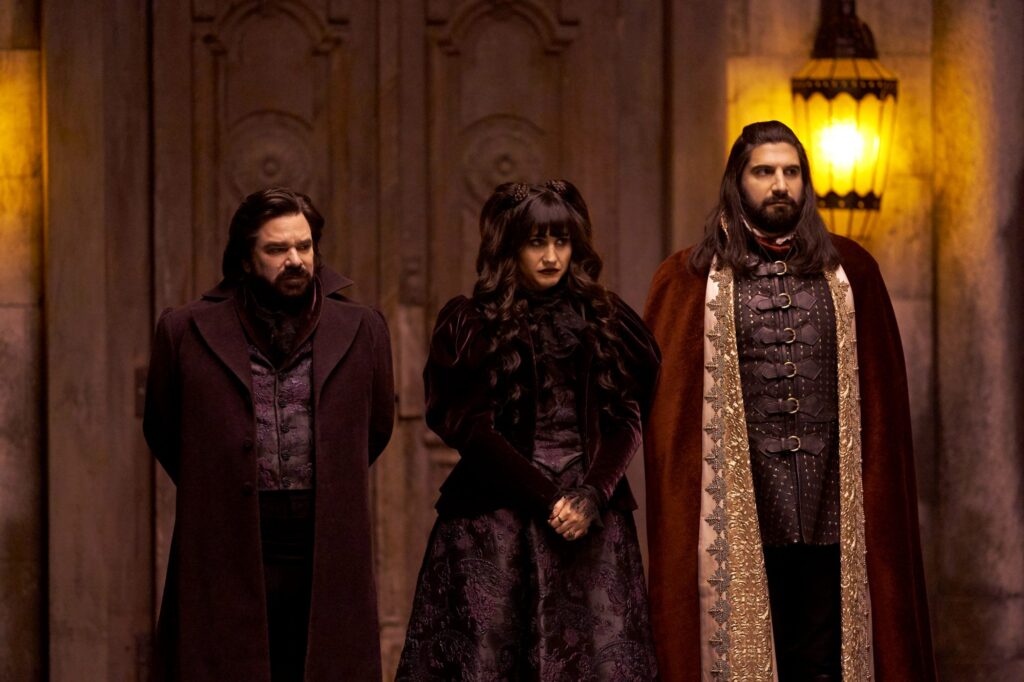
Filmed like a mockumentary, What We Do In The Shadows follows a mini coven of Vampires who live in Staten Island. The first vampire we met is Nandor the Relentless, the oldest of the vampires who once ruthlessly ruled a Kingdom that has been absorbed into modern day Iran. As per his own words, they called Nandor the Relentless because he did not relent.
Nandor has been served by his familiar Guillermo, whose sole desire is for his master to turn him into a vampire so he can be like his idol, Armand from Interview with a Vampire (Antonio Banderas’ character). Unfortunately for Guillermo, it becomes increasingly likely that Nandor has no intentions of ever turning him into a vampire. And in addition, Guillermo start exhibiting an unusual skill of killing vampires.
Also in the house are Nadja and her husband Lazlo. Nadja, who has an unwavering hatred of witches and believe they are the course of all her problems, craves to rise within the social hierarchy of vampiredom by, amongst other things, throwing the best bi-annual orgy that any vampire has ever seen. Her desire though is often hampered by the moronic activities of the men in her life, especially her husband Lazlo.
Lazlo was the most handsome man in his village of lepers before Nadja turned him into a vampire. Driven by an insatiable libido, Lazlo has a level of confidence in everything he does, which is not in proportion to his intelligence.
The last vampire in the house is Colin Robinson. Unlike the other vampires, Colin Robinson is an energy vampire which means that he doesn’t feed on blood, but on energy that he drains from people by telling them unbelievably boring stories.
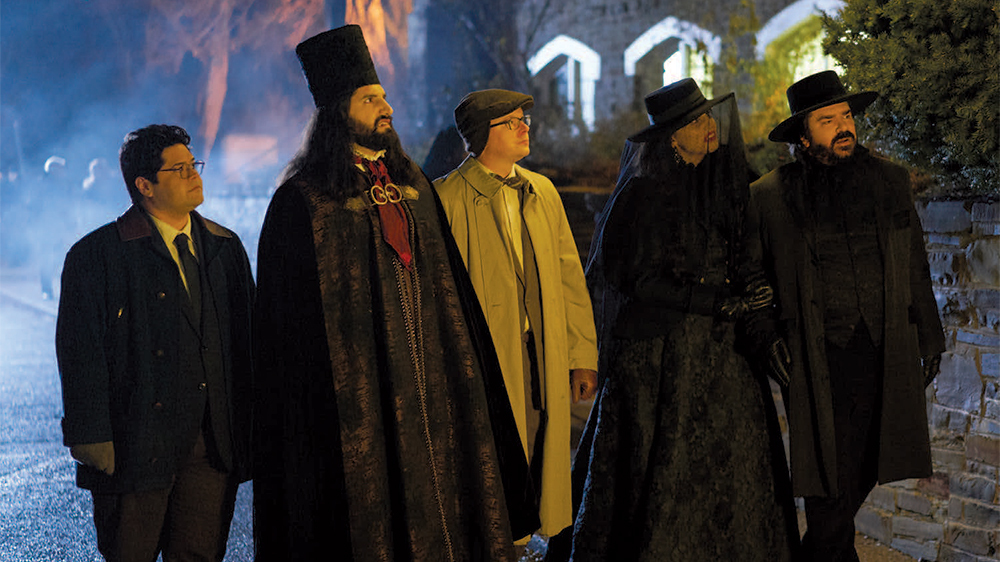
The show has also managed to attract some unbelievable guests stars, such as Wesley Snipes, Tilda Swinton and Mark Hamill to name but a few. With genius lines like ‘did you steal my semen?’, ‘I don’t give a f*** what your surname is, I had to do my own laundry’ & ‘Vampire sex is like pizza; in that even when it’s bad, it’s good. And it’s designed to be enjoyed by 8 or more people.’
If you’re a fan of that dry sense of humor that has been popularized by shows like The Office and Parks and Recreation, then you would love this show.
4.5/5
]]>Deprecated: Creation of dynamic property WP_Term::$cat_ID is deprecated in /home/booksgpb/public_html/wp-includes/category.php on line 378
Deprecated: Creation of dynamic property WP_Term::$category_count is deprecated in /home/booksgpb/public_html/wp-includes/category.php on line 379
Deprecated: Creation of dynamic property WP_Term::$category_description is deprecated in /home/booksgpb/public_html/wp-includes/category.php on line 380
Deprecated: Creation of dynamic property WP_Term::$cat_name is deprecated in /home/booksgpb/public_html/wp-includes/category.php on line 381
Deprecated: Creation of dynamic property WP_Term::$category_nicename is deprecated in /home/booksgpb/public_html/wp-includes/category.php on line 382
Deprecated: Creation of dynamic property WP_Term::$category_parent is deprecated in /home/booksgpb/public_html/wp-includes/category.php on line 383
- Top 3 Books of 2020 (South African or International):
All My Lies are True by Dorothy Koomson
Not to Mention by Vivian de Klerk
Old Drift by Namwali Serpell
- Top 3 Television Shows:
The Crown
Downtown Abbey
Game of Thrones S1-7
- Top 3 Movies:
I only have 2: The Wolf of Wall Street and 12 Years a Slave
- Top 3 Musical Acts:
Notorious BIG
Luther Vandross
Whitney Houston
- What are you reading right now?
House of Stone by Christina Lamb
About your latest book
- In your own words, what is A Family Affair about?
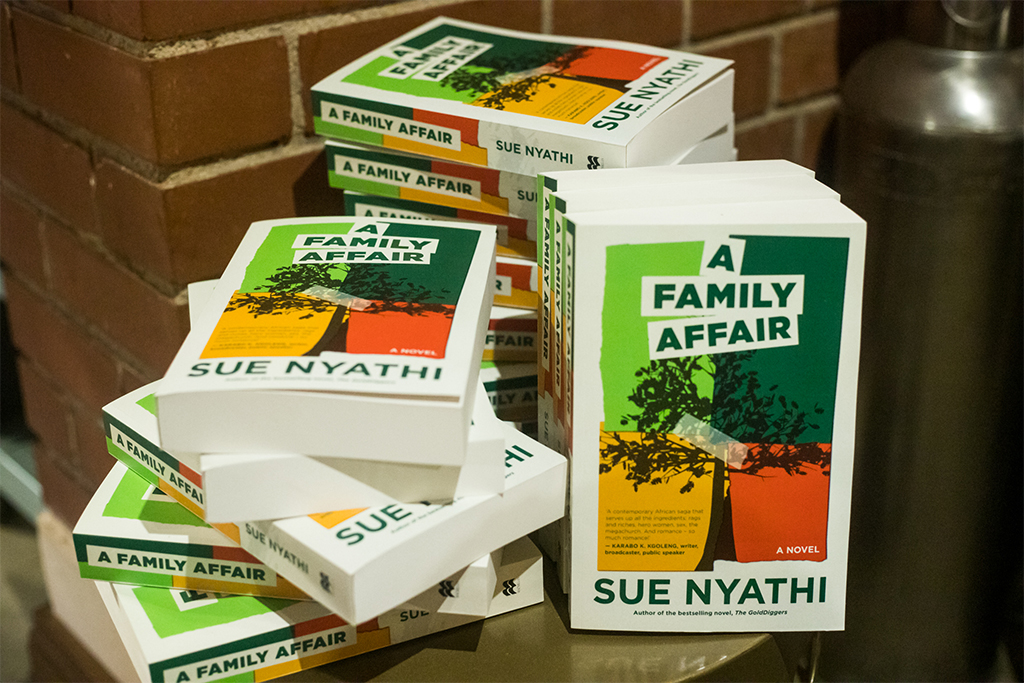
A Family Affair is a book about family ties and the lies that often bind them. The book invites you into the Mafu home in middle class suburbia, Bulawayo. On the outside, they look like a picture perfect middle class family, headed by the patriarch, Abraham who pastors a church and his long standing wife, Phumla. The three main themes that permeate the narrative of the novel are patriarchy, religion and culture. It incorporates romance and sex, sometimes illicit and not always consensual. There is humour, drama and intrigue which make up this saga. All families are complicated. Think of the first family we meet in the bible, Cain killed his brother Abel – right there you have sibling rivalry and jealousy played out. Yet families are obsessed with keeping things together and exuding this appearance of perfection yet a lot of dysfunction begins in families.
- What inspired you to write it?
This book was inspired by the society we live in. Everything you read in the book happens in real life. I was 20 when I started making observations for this book. It’s a manuscript I would revisit at certain stages of my life only to discover that nothing had actually changed, things that bothered me then, still bother me now and so I decided maybe it was time that this book saw the break of dawn.
- The reader goes on a highly emotional journey in which the story addresses some serious evils that possess communities, such as gender-based violence, misogyny and sexual assault. What I’d like to know is, did you intentionally write A Family Affair around these themes, or did they organically infiltrate the plot during your writing process?
Yes, I was very intentional about writing about these themes because gender based violence remains an insidious occurrence in our society. It was there when I started writing this book 20 years ago, I can’t say it has gotten worse, I just believe that women are now more adept at exposing it than they were 20 years ago. So I was keen to explore how social constructs, religion continue to perpetuate and not alleviate gender based violence.
- What I took away from the book was an indictment of the expectations society has on people. In this case, on black women, and the shunning, almost abuse of women who are seen as not meeting those expectations? Is this an accurate interpretation? And if so, what message would you like to deliver to black girls and women in regards to this?
Yes, this is an accurate interpretation of the book. I don’t want to be dogmatic in my messaging but I just want to tell that girl who doesn’t want to conform to societal expectations that it’s okay. That what is important is that you live your own truth and own it.
- A lot of reviews of the novel note that there are a number of graphic love scenes. Was this done intentionally to ‘shock’ the reader?
The love scenes in the book are not there just to fill space or padding. They are an integral part of the plot. There are different types of sex described in the book, consensual and non consensual. I have found in many discussions that people don’t understand the concept of consent, marital rape, date rape etc. So you juxtapose this with consensual fulfilling sex. So people shouldn’t just flip pass them. Not sure why people are uncomfortable with sex in novels. If you are going to write a novel about family, church there will obviously be procreation in there!
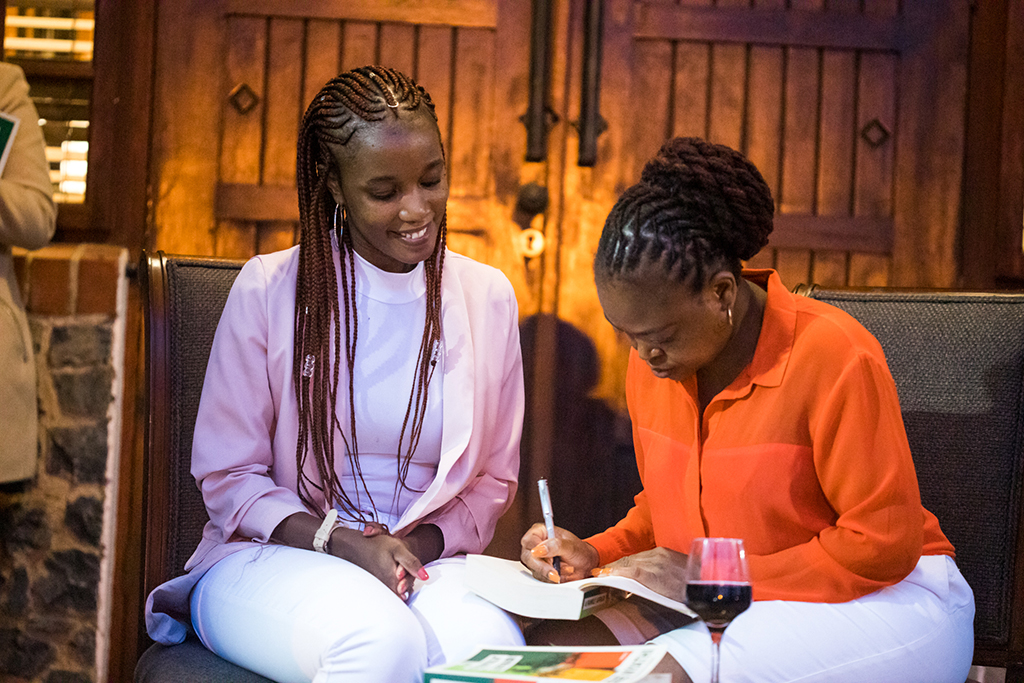
About Sue Nyati
- Can you tell us a bit more about yourself? (Where you come from, what you do, your interests and hobbies etc. Any fun details)
I was born, bred and educated in Bulawayo, the second largest city in Zimbabwe. This is why you will find that most of my books are set here. I have always been an avid writer and my creativity began to show at the age of 8 when I would cut out pictures from magazines and write little excerpts around them. My interest in writing was further nurtured throughout high school where I received several accolades for my poetry. However paradoxically, it is prose that has captured my heart. Fun facts about me, I used to be a Formula 1 Racing addict. The sport used to give me an adrenaline rush. I don’t watch much television but I love binge watching series. I was a member of the Bulawayo Ornithological Society (Bird Watching) so that I had the freedom to leave home on weekends!
- What’s your earliest piece of writing that you remember?
I was thirteen when I penned my first “novel” titled “Crazy over You” on a Marvo A5 exercise book. My classmates were my first readers and my books were passed around from class to class. I gained notoriety for books in high school.
- A Family Affair is your third novel, after The Polygamist and The Gold Diggers. Where do you get your inspiration for your books/stories from?
I draw my inspiration from life. If you think that family is the most basic unit but there is so many stories in a family. We all come from families, we love them, hate them or tolerate them but every family has a story and more often than not the stories are scandalous. So the Mafus lift up a mirror to your own families and hopefully people will introspect and be equally provoked into discussion about some of the themes I have raised.
- Your debut novel, The Polygamist had been optioned to be turned into a movie in 2017. Do you have an update on how that process is going?
It was optioned but the option has expired without exercise by the producer due to lack of funding for the film so the rights have since lapsed and have reverted back to me however I don’t think that is the end of that story. There is something in the pipeline with regards to adaptation but at this point it might not necessarily be a movie.
- In your opinion, what’s the greatest challenge facing writers in the South African market?
There are many challenges for South African based writers, but the greatest being that they are writing for a very small market which means there is limited scope in terms of sales and earning a living from writing. Trying to diversify as a South African based writer and breaking into the global market is even harder.
- Writing is hard. It’s a lonely art that requires you to be disciplined. It requires hours and hours of research and even more time hunched over a computer and writing. Thereafter, you open yourself up to criticism from complete strangers. Why would you want to do that to yourself?
I do that for the simple reason that writing chose me, I did not choose it and every time my son says to me he wants to be a writer like me I try to dissuade him for the very same reasons. You need to be thick skinned as a writer, not just to handle scathing criticism but to handle the rejection which often times comes with manuscript submissions. Also writing nowadays requires you to be performative and this is difficult if you consider how introverted most writers are.
However because I am passionate about writing, this fuels me through the long arduous hours spent in creation. I don’t think it’s lonely but rather it requires you spend many hours alone. I never feel alone as during the writing process I keep company with my characters. When I think of the times I wasn’t writing it would still call to me. The voices in my head would get louder and louder, forcing me to write them into life. I can’t run away from it, which is why I say it chose me.
- In my opinion, the goal of a writer is to evoke a reaction from the reader. What do you hope to evoke from your readers with A Family Affair?
I want to provoke a discussion on the issues of culture, gender based violence, patriarchy, marriage, sex, religion and the other themes that are woven through the book. I have eavesdropped on conversations about the characters in my book and I love it. I don’t want people to say it’s a good book and leave it there, I want them to engage with it and interrogate it. There is so much in that book beyond being an entertaining read.
- Do you read your book reviews? How do you deal with bad or good ones?
I do read my book reviews, especially in the beginning after the book is released just to gauge the reception. If people liked it, what did they like about it? If they hated it, what did they hate? However I try not to take it to heart. The same way I read a book and not like it is also the same way others could receive my work. I think the trick is to realise that not everybody will like your writing or gravitate towards your books. However, you just need to get enough people to buy into your story and that’s enough.
- Do you hide any secrets in your books that only a few people will find?
I don’t hide secrets but there are certain aspects of me that land up in some of my books so if you know me very well you will be able to discern that this is Sue here. However there are certain things that only certain readers pick up and I am like wow, you are quite a discerning reader.
- What was your hardest scene in A Family Affair to write?
The domestic violence scenes were hard to write because recreating violence is not an easy feat but at the same time you need the reader to feel the brutality. It’s not enough to say he beat her up. This is where the showing and not telling becomes so important. I find a lot of times violence in novels is romanticized. There is domestic violence but then it morphs into hot passionate sex likes it’s a prelude to foreplay. So while that may happen, it wasn’t my intent. I wanted to write violence for what it is – violence. Some readers may complain that the scenes are too graphic but violence isn’t pretty, its ugly and should make us uncomfortable.
- Are you working on any other projects at this moment? What do you have planned for the future?
Yes, I am busy with an anthology but apart from that I also started writing the sequel to the Polygamist. This was unplanned and just took root during the lockdown. For the longest time I swore I would not write a sequel to the Polygamist. I felt the story was complete. However as ideas often do, it jumped at me and I was like there is the story.
Engage with Sue
Website: www.suenyathi.co.za
Twitter: @suenyathi
Instagram: @suenyathi
Facebook: Sue Nyathi
Buy your copy now:
Reviews
]]>Deprecated: Creation of dynamic property WP_Term::$cat_ID is deprecated in /home/booksgpb/public_html/wp-includes/category.php on line 378
Deprecated: Creation of dynamic property WP_Term::$category_count is deprecated in /home/booksgpb/public_html/wp-includes/category.php on line 379
Deprecated: Creation of dynamic property WP_Term::$category_description is deprecated in /home/booksgpb/public_html/wp-includes/category.php on line 380
Deprecated: Creation of dynamic property WP_Term::$cat_name is deprecated in /home/booksgpb/public_html/wp-includes/category.php on line 381
Deprecated: Creation of dynamic property WP_Term::$category_nicename is deprecated in /home/booksgpb/public_html/wp-includes/category.php on line 382
Deprecated: Creation of dynamic property WP_Term::$category_parent is deprecated in /home/booksgpb/public_html/wp-includes/category.php on line 383
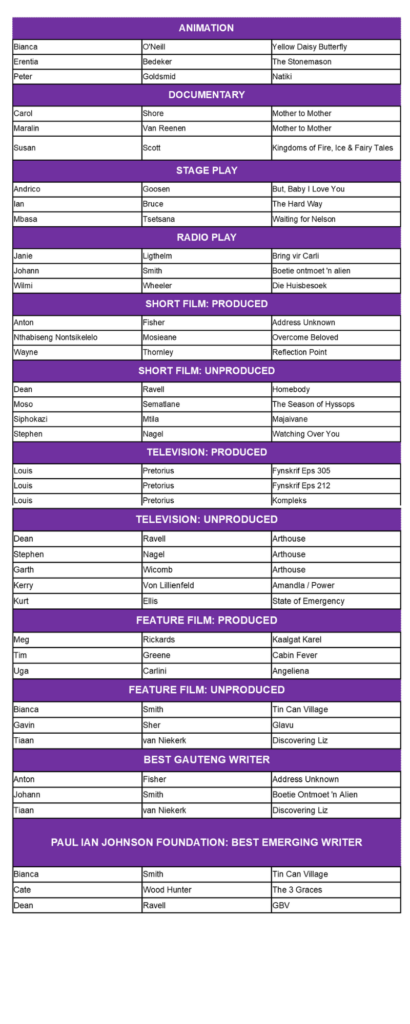
The ceremony takes place in Johannesburg on the 15th of May. Good luck to all the nominees.
]]>Deprecated: Creation of dynamic property WP_Term::$cat_ID is deprecated in /home/booksgpb/public_html/wp-includes/category.php on line 378
Deprecated: Creation of dynamic property WP_Term::$category_count is deprecated in /home/booksgpb/public_html/wp-includes/category.php on line 379
Deprecated: Creation of dynamic property WP_Term::$category_description is deprecated in /home/booksgpb/public_html/wp-includes/category.php on line 380
Deprecated: Creation of dynamic property WP_Term::$cat_name is deprecated in /home/booksgpb/public_html/wp-includes/category.php on line 381
Deprecated: Creation of dynamic property WP_Term::$category_nicename is deprecated in /home/booksgpb/public_html/wp-includes/category.php on line 382
Deprecated: Creation of dynamic property WP_Term::$category_parent is deprecated in /home/booksgpb/public_html/wp-includes/category.php on line 383
About your latest book
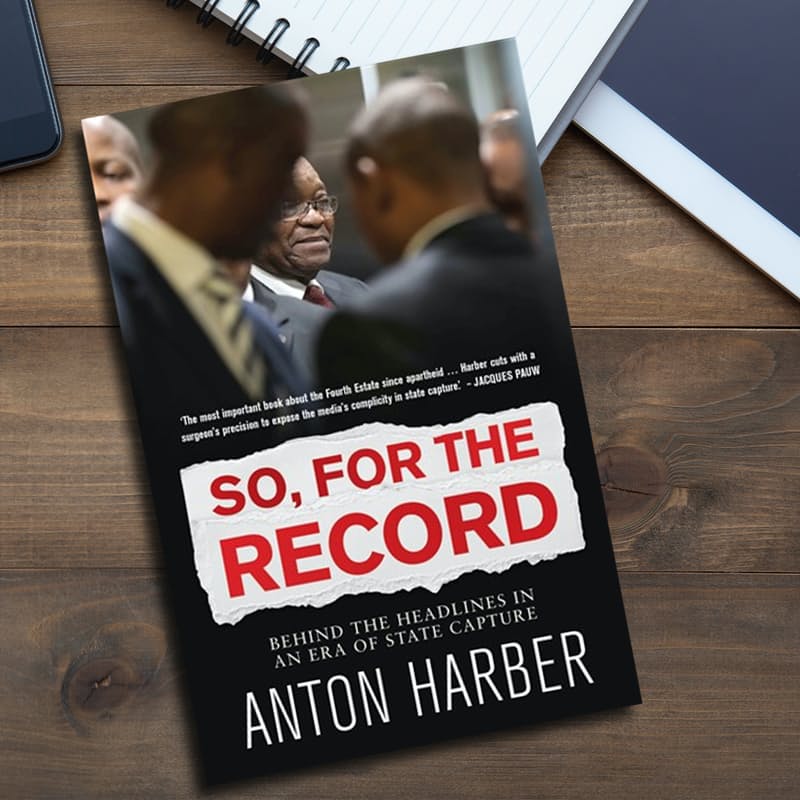
- In your own words, what is So, for the Record about?
It is a deep-dive into what lies behind the best and worst of South African journalism during the state capture era, and the contribution that journalists made both in enabling and undermining this form of corruption.
- What inspired you to write it?
I thought it might help us understand what journalists can do for good, and for bad. It helped that the story had all the elements of a thriller: brothels, honeypots, brown envelopes, secret meetings, backstabbing and the tragedy of lives and careers carelessly ruined.
- As an active journalist, did you feel a conflict of emotions criticising fellow journalists?
It is hard to take on friends and colleagues, but I thought it essential that we break down this notion that we shouldn’t criticize each other. I want to promote accountability and transparency among journalists to ensure we practice what we preach to others who wield public power. What worried me was the fear that I would give fuel to those who hate the media and want to denigrate journalists.
- How was your book received by fellow journalists?
Positively, so far. But I await the storm …
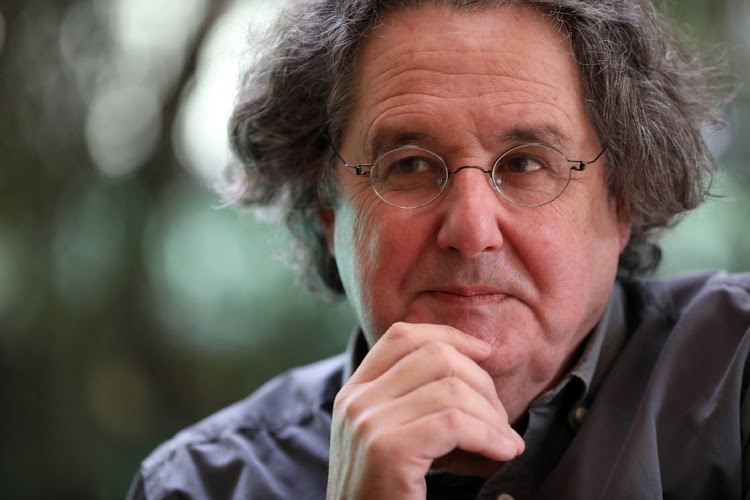
About Anton Harber
- Can you tell us a bit more about yourself? (Where you come from, what you do, your interests and hobbies etc. Any fun details)
I knew from an early age that I wanted to be a journalist. I have always loved books, magazines and newspapers and been passionate about news and politics. I grew up in Durban, the son of a saxophonist, and came to university in Joburg. Like most Joburgers, I love and hate this great city in equal measure, and have never been able to leave it for long. I love chess (and particularly queens gambit accepted), jazz and would like to spend my old age listening to Joshua Redman, sipping a single malt whisky and reading a great book, perhaps within hearing of the sea.
- What’s your earliest piece of writing that you remember?
I have a copy of a speech I wrote for a school debate when I was about 13 on how unfair apartheid was. It was charmingly naïve.
- In your opinion, what’s the greatest challenge facing writers in the South African market?
The market itself – it is frustratingly small and elite. This country won’t come right until people are reading more. The real gap, though, is we need a good outlet for longform journalism – work that is more substantial than a quick report, and less than a book, something of real impact that can be read in an hour.
- Writing is hard. It’s a lonely art that requires you to be disciplined. It requires hours and hours of research and even more time hunched over a computer. Thereafter, you open yourself up to criticism from complete strangers. Why would you want to do that to yourself?
The only reason I embark on the misery of writing a book is that I am even more miserably frustrated if I don’t. Writers must write.
- In my opinion, the goal of a writer is to evoke a reaction from the reader. What do you hope to evoke from your readers with this book/with your writing?
Argument, debate, abuse – any sign that the reader is still awake.
- Do you read your book reviews? How do you deal with bad or good ones?
I once was reviewed by someone who said he would never read anything I wrote. I thought that was a high moment for South African literary culture and am pleased to say that I have read everything this person ever wrote. For the rest, I am just thankful people are interested enough to write something.
- Are you working on any other projects at this moment? What do you have planned for the future?
I am still in the recovery stage from this book.
Engage with Anton
Twitter: @antonharber
Facebook: Anton Harber
Buy your copy now : Support indie bookshops: https://lovebooks.co.za/product/so-for-the-record/
Reviews
https://www.goodreads.com/book/show/55406889-so-for-the-record
The Writer Snap Shot
Top 3 Writers (South African or International):
Gabriel Garcia Marquez
Phillippe Sands
Catherine Boo
Top 3 South African (only) Writers:
Jacob Dlamini
Jonny Steinberg
Charles van Onselen
Top 3 Books (South African or International):
100 Years of Solitude – Gabriel Garcia Marquez
Beyond the Beautiful Forevers – Catherine Boo
Midnight’s Children – Salman Rushdie
Top 3 South African (only) Books
The Night Train – Charles van Onselen
Askari – Jacob Dlamini
Three Letter Plague – Johnny Steinberg
Top 3 Television Shows:
West Wing
Breaking Bad
The Girls of St Agnes
Top 3 Musical Acts:
Joshua Redman
Bad Plus
Nora Jones
What are you reading right now?
Mark Gevisser’s mammoth The Pink Line; Dikgang Moseneke’s judicial (and judicious) memoire, All Rise; Jon Gertner’s History of Bell Labs, The Idea Factory.
Deprecated: Creation of dynamic property WP_Term::$cat_ID is deprecated in /home/booksgpb/public_html/wp-includes/category.php on line 378
Deprecated: Creation of dynamic property WP_Term::$category_count is deprecated in /home/booksgpb/public_html/wp-includes/category.php on line 379
Deprecated: Creation of dynamic property WP_Term::$category_description is deprecated in /home/booksgpb/public_html/wp-includes/category.php on line 380
Deprecated: Creation of dynamic property WP_Term::$cat_name is deprecated in /home/booksgpb/public_html/wp-includes/category.php on line 381
Deprecated: Creation of dynamic property WP_Term::$category_nicename is deprecated in /home/booksgpb/public_html/wp-includes/category.php on line 382
Deprecated: Creation of dynamic property WP_Term::$category_parent is deprecated in /home/booksgpb/public_html/wp-includes/category.php on line 383

Books and More was started by two published novelist with differing levels of success (from none to very little), an aspiring writer and the husband of one of us who, although he works in finance, has some website design skills. Our goal with this project is to promote South African writers and South African books. And when we say South African writers and books, we mean by writers and publishers who are based in South Africa, irrelevant of nationality.
The South African market of readers is way too small. We simply don’t buy enough books, and when we do, the books we buy are mostly from international writers. It’s a travesty that the average South African novelist will only sell 600 to 1000 books in their lifetimes. This is simply not right.
Are we saying we’re going to change that? We hope we can, but to be honest, we don’t know. We don’t know if this project will survive one year, one month or one week. But we’re going to try.
]]>Deprecated: Creation of dynamic property WP_Term::$cat_ID is deprecated in /home/booksgpb/public_html/wp-includes/category.php on line 378
Deprecated: Creation of dynamic property WP_Term::$category_count is deprecated in /home/booksgpb/public_html/wp-includes/category.php on line 379
Deprecated: Creation of dynamic property WP_Term::$category_description is deprecated in /home/booksgpb/public_html/wp-includes/category.php on line 380
Deprecated: Creation of dynamic property WP_Term::$cat_name is deprecated in /home/booksgpb/public_html/wp-includes/category.php on line 381
Deprecated: Creation of dynamic property WP_Term::$category_nicename is deprecated in /home/booksgpb/public_html/wp-includes/category.php on line 382
Deprecated: Creation of dynamic property WP_Term::$category_parent is deprecated in /home/booksgpb/public_html/wp-includes/category.php on line 383
Here are ten essential tips every beginning writer can use:
1. Accepting your talent.
Some people are just born with the natural ability to write great novels. Talent is not something that can be taught, but talent isn’t the only requirement to writing a novel. Discipline is just as, if not more important. Talent means nothing unless you have discipline to make use of it. And if you feel your talent is not as strong as it should be, you can supplement it with discipline, study and research. Writing a novel might not come as easy to some, but it will come if you work at it.
2. Study.
One of the greatest and most prolific writers of our time, Stephen King offers this advice to wannabe writers. ‘Read a lot and write a lot.’ But don’t only read for enjoyment, but read to study how the experts do it. How they structure their novels, and what about the novel do you like. When you find this, try and incorporate those aspects in your work.
3. Write from your passionate self
We all wear a mask to protect us from hurt in the world. It also blocks the light of our vision. As children, we quickly learn which behaviours are praised and which are punished. We learn to act other than we really feel in order to maximize our life experience. In time, we buy into that mask, believing it is who we really are. Worse, the mask softens our rough edges and moderates the peaks and troughs of our passion, leaving us afraid to explore the depths of our secret hearts and reveal our true selves in words. To speak with an author’s clarion voice, you must shatter your mask, uncover your actual self, and thrust it into the world.
4. Be a Story Weaver – NOT a Story Mechanic!
Structure is important but not at the expense of passion. No one reads a book or goes to a movie to experience a great structure. Authors come to a story to express their passions and readers and audience members come to ignite their own. While structure is the carrier wave upon which passion is transmitted, without the passion, it’s just noise. Conversely, passion without structure can be full of sound and fury yet signifying nothing. So find the proper balance. Let passion be your captain and structure be your guide.
5. Let your Muse run wild.
The easiest way to give yourself writer’s block is to bridle your Muse by trying to come up with ideas. Your Muse is always coming up with ideas – just not the ones you want. If you try to limit the kind of material you will accept from her, she’ll shut up entirely. So let your Muse run free. When she gives you an hysterical moment with a polka-dot elephant while writing a serious death scene, consider including it, perhaps as an hallucination. Give it a try, it might liven up your death scene! And after you’ve written it, if it doesn’t work, then save it in a file for later use. It may seem like a waste of time, but your Muse will know she has been treated with respect, and will likely now give you just the idea you need.
6. Don’t be a slave to convention.
Beginning writers often look to other successful stories to learn how things ought to work. But so do all the other beginning writers. A book editor, agent, or script reader sees hundreds of manuscripts every year, all made up of the same pieces and hitting the same marks. You’ll never get noticed in that crowd. If you want your work to be discovered, break format, shake it up, do something different. Make your sheriff 8 years old, make your two lovers twins, set your gothic romance underwater. You’ll never be noticed if you don’t stand out.
7. Be your own critic without being critical.
Write something. Do it now. Now look at it not as an author, but as a reader or audience and ask questions about it. For example, I write, “It was dawn in the small western town.” Now I ask: 1. What time of year was it? 2. What state? 3. Is it a ghost town? 4. How many people live there? 5. Is everything all right in the town? 6. What year is it? Then let your Muse come up with as many answers for each question as possible. Example: 6. What year is it? A. 1885 B. Present Day C. 2050 D. After the apocalypse. Then expand by asking questions about the answers you just wrote such as: D. After the Apocalypse. 1. What kind of apocalypse? 2. How many people died? 3. How long ago was the disaster, and so on. By alternating between critical analysis and creative Musings, you will quickly work out details about your story’s world, who’s in it, what happens to them and what it all means.
8. Avoid the Genre Trap
Too many beginning writers see genres as checklists of elements and progressions they must touch, like checkpoints in a race. But a genre is not a box in which to write. It is a grab bag from which to pull only those components you are truly excited to include in your story. Every story has a unique personality, you build it chapter by chapter or scene by scene with every genre choice you make. By drawing on aspects of many different genres and combining those pieces together, you can fashion an experience for your readers or audience unlike any other.
9. WRITE!
No matter what your natural ability, you will never approach your potential without exercise. Jot down every idea. Carry it as far as you can before it runs out of steam. Do it again, and again: as many different ideas as far as you can take them. Write nonsense words. Write your concept of a villain’s shopping list for the supermarket (they have to eat, don’t they?) Write about anything. Write about nothing! But don’t stop, not now, not ever. You are a writer aren’t you? Then for God’s sake, WRITE!
10. WRITE!
That’s right – tip 10 is the same as tip 9. Why? Because it is the single most important tip of all: If you want to be a writer, write! When you write, you are writer, when you don’t, you aren’t. The more you write the better you get. Your vocabulary become more fluid, your word-play more playful. Olympic athletes don’t only run in races – they practice every day, for hours at a time. So even if you aren’t writing something for publication or even to simply share, keep the mental muscles toned and ready. Then, when the Muse does strike, you can hit the page writing.
]]>Deprecated: Creation of dynamic property WP_Term::$cat_ID is deprecated in /home/booksgpb/public_html/wp-includes/category.php on line 378
Deprecated: Creation of dynamic property WP_Term::$category_count is deprecated in /home/booksgpb/public_html/wp-includes/category.php on line 379
Deprecated: Creation of dynamic property WP_Term::$category_description is deprecated in /home/booksgpb/public_html/wp-includes/category.php on line 380
Deprecated: Creation of dynamic property WP_Term::$cat_name is deprecated in /home/booksgpb/public_html/wp-includes/category.php on line 381
Deprecated: Creation of dynamic property WP_Term::$category_nicename is deprecated in /home/booksgpb/public_html/wp-includes/category.php on line 382
Deprecated: Creation of dynamic property WP_Term::$category_parent is deprecated in /home/booksgpb/public_html/wp-includes/category.php on line 383
The concept of Resident Alien is not unique. An alien crashes on Earth and pretends to be human until it can complete its mission or escape. Robin Williams did it in Mork and Mindy and John Lithgow did it in 3rd Rock from the Sun. It is a tried and tested formula, but Resident Alien approaches it a little differently, by adding a healthy dose of drama and mystery to the folly.

What’s it about?
A UFO crashes in a small town in Colorado. The alien; a two legged and four armed monstrosity sneaks up to a cabin on the lake and kills the owner, before morphing into the owner himself as camouflage. The alien then learns how to speak by watching episodes of Law and Order and develops a rather unhealthy obsession with Jerry Orbach, star of the series. The alien is preparing to go out into the human world to firstly find the missing parts needed to repair his damaged spacecraft and secondly, to complete his mission. His plans though are hampered when the local doctor is murdered, and the Amazing Grace beatboxing, action craving, and sharp tongued Sheriff turns to him for help. You see, the person who the alien killed and whose likeness he stole is Harry Vanderspiegel, a doctor who vacations at the cabin. Unable to resist the excitement of living a real Law and Order case, ‘Harry’ agrees to assist with the investigation – dun dun. All seems to be going well, until he encounters the Mayor’s son who can see past his disguise. Now Harry has three missions – repair his space craft, murder the Mayor’s son and complete his mission…which is to destroy all of humankind.
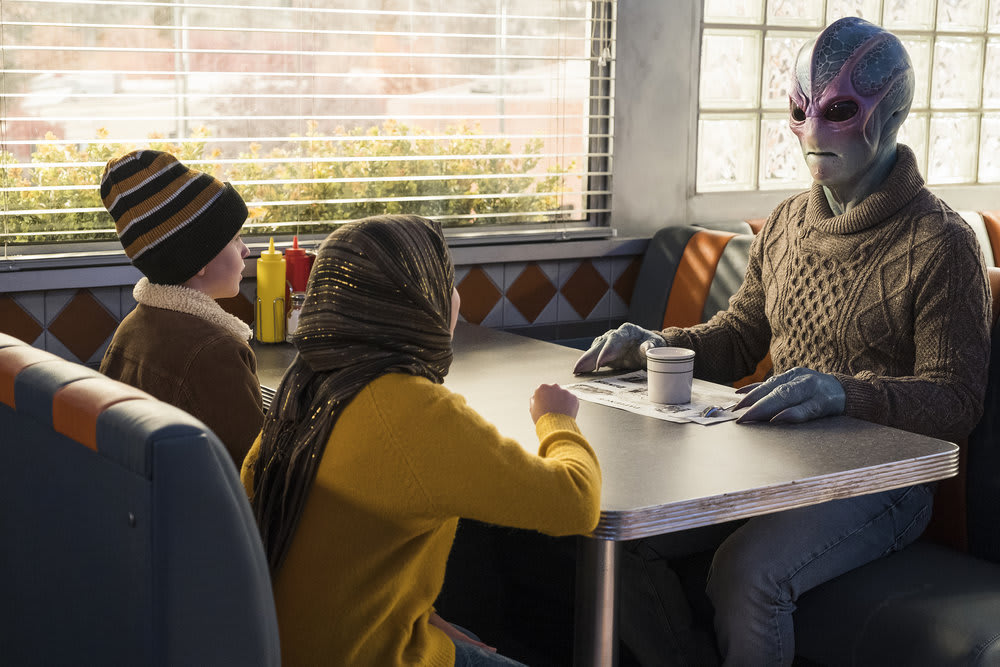
The true strength of Resident Alien is the casting. There isn’t an actor who could have played the character of Harry Vanderspiegel better than Alan Tudyk. He approaches the role with a childlike innocence when he discovers pizza and whiskey for the first time, but he’s also able to portray a more menacing aspect of the alien when required. His relationship with nurse Asta Twelvetrees played by Sara Tomko is the one through which Harry learns the most about what it means to be human. The two actors for me though, that steal every scene they are in are Corey Reynolds who plays the eccentric sheriff, and Alice Wetterlund who plays the former Olympic hopeful turn bar worker.
What stands out is how the cast feed off of one another, giving the audience the perception of authentic relationships. This is the strength the binds the story together, and this is why this show works. So far, our favourite show of 2021.
Rating: 4/5
]]>